

 NL
NL

Industrie nieuws
Disposable Suction Irrigation Set: Surgical Uses, Components & Infection Control Guide
Surgical site infections remain one of the most consequential complications in operative medicine. They occur in a meaningful proportion of procedures, extend hospital stays, increase antibiotic consumption, and in serious cases require reoperation. Among the clinical measures consistently implicated in SSI prevention is one that takes place on the operating table itself: intraoperative wound irrigation combined with effective aspiration of contaminated fluid.
The instrument that makes this simultaneous function possible is the disposable suction irrigation set — a single-use device that delivers controlled irrigation fluid to the wound while continuously aspirating blood, debris, and contaminated effluent. This article examines how these devices work, where they are used, why their disposable design is clinically significant, and what procurement teams should verify before sourcing them.
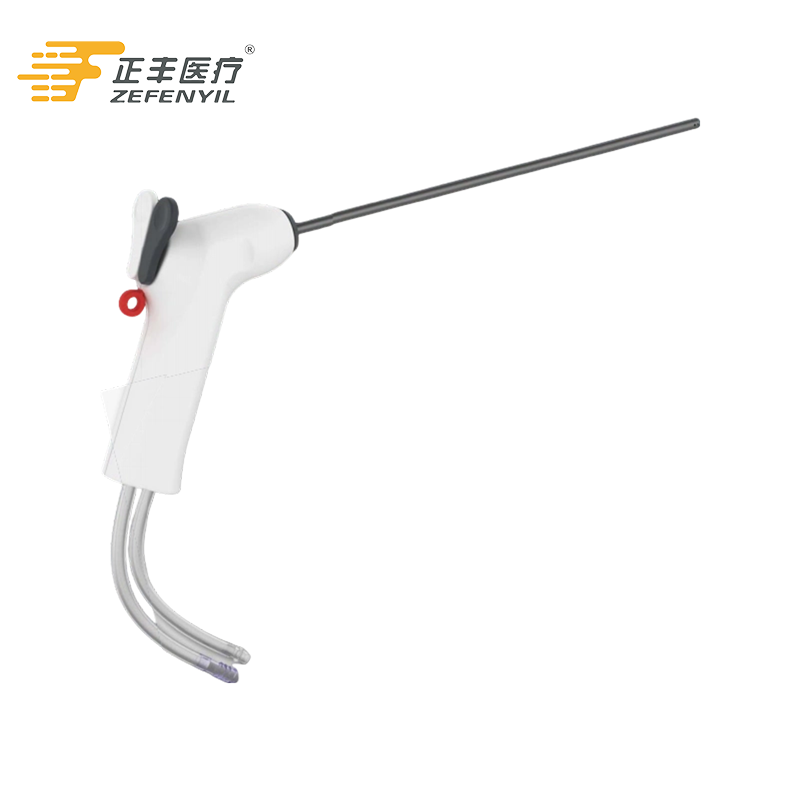
What a Disposable Suction Irrigation Set Does and How It Works
A suction irrigation set combines two functions that in earlier surgical practice required separate instruments: irrigation — the controlled delivery of saline or antiseptic solution to flush the wound — and aspiration, the removal of that fluid along with blood, secretions, and tissue debris. Combining both in a single handpiece reduces instrument changeovers during a procedure and keeps the operative field continuously clear.
The core components of a typical disposable suction irrigation device include the irrigation and suction tip, a housing with separate irrigation and aspiration buttons for independent control of each function, an irrigation tube connected to the fluid source via an irrigation connector, a suction tube connected to the wall vacuum system via a suction connector, and a tip holder for secure positioning during use. The dual-button control mechanism allows the surgeon or surgical assistant to switch between irrigation and suction without releasing the handpiece — a design detail that materially affects the speed and cleanliness of the procedure.
During laparoscopic procedures, the suction irrigation tip is introduced through a trocar port. During open surgical procedures, the tip is used directly at the wound site. In both settings, the device enables lavage of the cavity or wound bed and immediate removal of spent irrigation fluid, preventing fluid accumulation that would otherwise obscure visibility or create a reservoir for bacterial growth.
Why Disposable Design Matters for Infection Control
The case for single-use suction irrigation devices rests on a straightforward infection control logic: any instrument that enters the surgical field and contacts wound tissue, blood, and body fluids is a potential vector for cross-contamination. Reprocessing complex multi-lumen devices reliably is technically demanding. Internal lumens of irrigation and suction tubing are difficult to clean, difficult to inspect, and difficult to sterilize to the same standard as solid instruments. Residual organic material in narrow channels supports biofilm formation, and biofilm in turn resists standard sterilization cycles.
Disposable suction irrigation sets eliminate the reprocessing variable entirely. Each unit arrives individually packed in sterile packaging, is used once, and is discarded according to biohazard disposal protocols. There is no question of incomplete sterilization, no risk of cross-patient contamination from inadequately cleaned lumens, and no staff time required for the reprocessing workflow. For surgical centres and hospitals operating under tight turnaround schedules between procedures, this simplification of the infection control pathway has practical operational value alongside its direct clinical benefit.
The World Health Organization's global guidelines on surgical site infection prevention have placed intraoperative wound irrigation in an increasingly prominent role in SSI prevention protocols. Clinical literature on wound irrigation as a strategy for SSI prevention identifies contamination control at the point of care as a central mechanism — reinforcing why the sterility assurance provided by single-use devices is not merely a regulatory preference but a clinically grounded requirement.
Clinical Applications Across Surgical and Emergency Settings
Disposable suction irrigation devices are used across a broad range of clinical settings wherever simultaneous wound flushing and fluid removal are required. Their application is not limited to planned surgical procedures.
General and laparoscopic surgery
In abdominal and laparoscopic procedures, irrigation and suction of the peritoneal cavity is standard practice during appendectomy, cholecystectomy, bowel resection, and gynaecological procedures. The device maintains a clear operative field by removing blood and irrigant continuously, allowing the surgical team to visualize anatomical structures without interruption for instrument changes.
Trauma surgery and emergency care
In trauma settings, wound contamination from external debris, devitalized tissue, and bacterial inoculation is a primary concern. High-volume irrigation of traumatic wounds has long been recognized as a critical step in reducing infection rates in contaminated injuries. A disposable suction irrigation device enables this lavage rapidly and under controlled pressure, with simultaneous aspiration preventing fluid from pooling in the wound and potentially driving contamination deeper into tissue planes.
Orthopaedic and thoracic surgery
Joint lavage during orthopaedic procedures and pleural cavity irrigation in thoracic surgery both require controlled high-volume fluid delivery with effective simultaneous drainage. In these settings, the ability to regulate irrigation and suction independently through separate button controls is particularly valuable — the surgeon can direct fluid precisely and manage aspiration volume to maintain optimal field conditions throughout the procedure.
ENT and specialized procedures
For ENT procedures operating in confined anatomical spaces, smaller-profile irrigation and suction tips provide the access geometry needed for the nasal cavity, sinuses, and ear canal. Disposable devices for these specialties are configured with narrower tips and finer flow control to suit the scale of the operative field.
| Surgical setting | Primary function | Key requirement |
|---|---|---|
| Laparoscopic / abdominal surgery | Peritoneal lavage and aspiration | Trocar-compatible tip, kink-resistant tubing |
| Trauma and emergency care | High-volume wound irrigation | Rapid deployment, single-use sterility |
| Orthopaedic surgery | Joint and wound bed lavage | Controlled flow, independent suction button |
| Thoracic surgery | Pleural cavity drainage and irrigation | High-volume capacity, secure connectors |
| ENT procedures | Cavity irrigation and secretion removal | Fine-gauge tip, precision flow control |
| General open surgery | Wound cleansing before closure | Sterile packaging, broad connector compatibility |
Component Design Details That Affect Clinical Performance
Not all disposable suction irrigation sets perform equally, and the differences that matter clinically are found in the engineering details of specific components rather than in headline specifications.
The irrigation and suction tip determines access geometry and flow distribution at the wound site. Blunt tips are standard for general wound irrigation; angled tips improve access in laparoscopic work where the tip must operate through a trocar at an oblique angle to the target tissue. Tip material affects flexibility and the risk of inadvertent tissue trauma — softer tips are preferred in delicate anatomical areas.
The irrigation and aspiration buttons should provide tactile differentiation so the surgeon can identify and activate each function by touch without looking away from the operative field. Button travel and resistance affect fatigue over extended procedures — a design that requires excessive force to actuate will impair control over time.
The tubing on both the irrigation and suction sides must be kink-resistant across the range of positions it will adopt during the procedure. Kinking in the irrigation line causes pressure spikes; kinking in the suction line causes fluid accumulation that obscures visibility. Reinforced or spiral-coiled tubing constructions address this in well-specified devices.
The connectors — both irrigation and suction — must be compatible with the facility's vacuum system and irrigation fluid delivery setup. Incompatible connectors are a procurement error that only becomes apparent in the operating theatre, at a time when alternatives may not be immediately available. Confirming connector compatibility against the facility's existing infrastructure before placing volume orders is a basic procurement discipline that is often overlooked.
Procurement Checklist for Disposable Suction Irrigation Devices
For hospital procurement teams and surgical supply distributors, the following checklist covers the verification points that determine whether a disposable suction irrigation set will perform reliably in clinical use and meet the facility's regulatory and operational requirements.
- Regulatory certification: Confirm CE marking (EU/UK), FDA 510(k) clearance (US), or the applicable market authorization for the target market. For Class II medical devices, certification is a baseline requirement — not a differentiating feature.
- Sterile packaging integrity: Each unit should arrive in individual sterile packaging with a clear expiry date, lot number, and sterilization method indicated. Packaging that shows evidence of prior opening, moisture ingress, or damage must not be used.
- Connector compatibility: Verify that both the suction connector and irrigation connector dimensions match the vacuum source and fluid delivery system at the point of use before committing to bulk stock.
- Tip configuration: Confirm that the tip geometry suits the intended surgical application — blunt for general wound irrigation, angled for laparoscopic use, fine-gauge for ENT. Mixed-application procurement should stock multiple tip configurations.
- Tubing length and kink resistance: Standard tubing lengths should accommodate the distance between the operative field and the wall connections without excess slack that creates handling difficulty or kink risk.
- Independent button control: Verify that irrigation and suction functions are independently controlled and that the button mechanism provides clear tactile feedback under surgical gloves.
- Material safety: Confirm that all patient-contact materials are latex-free and free of other known sensitizers. For facilities serving allergy-sensitive patient populations, this is a non-negotiable specification.
- Bulk purchasing terms and supply reliability: Single-use devices require consistent replenishment. Confirm lead times, minimum order quantities, and the supplier's ability to maintain supply continuity — supply interruption of a single-use device affects every procedure that requires it.
- Disposal compliance: Confirm that the device and its packaging are classified and disposed of correctly under the facility's biohazard waste management protocols.
For facilities sourcing across multiple surgical specialties, working with a manufacturer that supplies a coordinated range of open surgical instruments including suction and irrigation devices simplifies vendor management and ensures dimensional compatibility across the instrument set. For laparoscopic and minimally invasive applications, disposable endoscopic and laparoscopic instruments designed for single-use sterile applications provide the trocar-compatible configurations required for minimally invasive procedures. Post-procedure fluid and waste management is supported by the medical auxiliary equipment range covering operating room support systems.
The Broader Role of Single-Use Devices in Surgical Safety
The disposable suction irrigation set is one component of a broader shift in surgical instrument design toward single-use configurations for devices that cannot be reliably reprocessed without disproportionate effort or residual risk. This shift is driven by converging pressures: tightening infection control standards, increasing regulatory scrutiny of reprocessing validation, and recognition that the total cost of reprocessing — labour, sterilization consumables, quality control, and downtime — is often higher than the unit cost of a well-specified disposable alternative.
For procurement teams, the relevant question is not whether single-use devices cost more per unit than their reusable counterparts, but whether the total cost of ownership — including reprocessing, infection-related complications, and regulatory compliance burden — favours one approach over the other in the specific clinical context. For suction irrigation devices used in contaminated or infected fields, the infection control argument for disposable design is clear. For devices used in clean elective procedures at high volumes, a careful cost analysis may support either approach depending on the facility's reprocessing capability and throughput.
What is consistent across settings is the requirement that whichever approach is chosen, the device entering the operative field must deliver reliable performance, maintain sterility to the point of use, and support the surgical team in keeping the wound clean, visible, and free of contaminated fluid throughout the procedure. The disposable suction irrigation set, when correctly specified and sourced from a certified manufacturer, meets all three requirements in a single instrument.

- Snelle koppelingen
- About Us
- Quality
- Service
- News
- Contact us
- Ons product
- Wegwerp-endoscopische laparoscopische instrumenten
- Wegwerpwondsluiting
- Instrumenten voor thoraxchirurgie
- Elektrochirurgische instrumenten
- Open chirurgische instrumenten
- Instrumenten voor urine-anorectale chirurgie
- Gastro-enterologie chirurgische instrumenten
- Medische hulpapparatuur
- Bloedvoorbereidingsapparaat
- Neem contact met ons op
- Tel:+86-519-69878833
- Phone:+86-13584319056
- E-mail:[email protected]
- Address:Gebouw 2D, 2C en 3C, Wujin Sci-tech Pioneer Park, No. 256 Middle Mingxin Road, Hutang Town, Wujin District, Changzhou, 213164 Jiangsu P.R. China

